Republican Supreme Court Justices Have Dictated Abortion Regulations For Fifty Years. Their Ruling in Dobbs Hands That Responsibility Over to Congressional Democrats.
Congress must pass sensible abortion control ending the patchwork of inconsistent abortion laws in 50 states. Congress is best suited to balance the rights of women and the unborn.
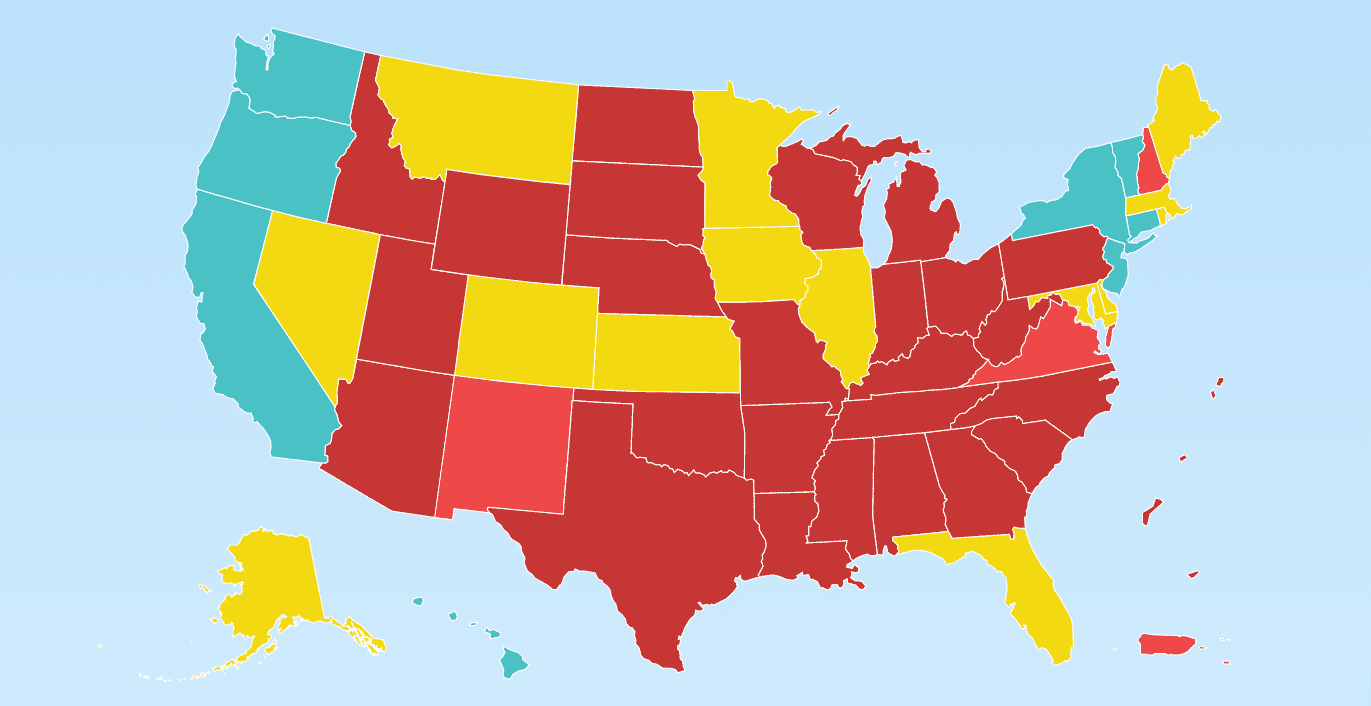
For half a century unelected Republican justices have regulated the bodies of women. The first abortion regulations were written by a Republican Justice in the Roe v. Wade opinion in the 70s. These regulations were changed in the 90s by three more Republican Justices in Planned Parenthood v. Casey. Finally, in Dobbs v. Jackson Women's Health Organization, the court has decided it is asinine for Republican justices to be regulating the bodies of women—an ill-conceived effort that has resulted in a patchwork of abortion laws in 50 different states. It is now time for Congress to pass sensible abortion regulations - until then American women will continue to be at the mercy of 50 different state legislatures.
The nation’s first abortion guidelines were crafted in the 1970s by Republican Justice Harry Blackmun. His qualifications? The summer before writing the opinion in Roe v. Wade Blackmun spent an entire week researching the history of abortion at the Mayo Clinic who he had represented before his accession to the bench.1 Blackmun’s research lead him to determine that states could ban all abortions in the 3rd trimester as long as the woman’s life was not at risk, limit abortions in the 2nd trimester to protect the health of a woman, but could not regulate abortion during the first trimester of pregnancy. Blackmun based this framework on his belief that a fetus was not viable until the 3rd trimester.
As a result, for more than 20 years each state drafted its abortion guidelines around Blackmun’s ‘trimester framework’ and his belief that a fetus was not viable until after 28 weeks despite the fact that the justice wasn’t a scientist, doctor, or policymaker. By the 1990s three different Republican justices including David Souter, Anthony Kennedy, and Sandra Day O’Connor determined that medical technology had advanced to the point where a fetus was viable at 23 weeks. This decision was based on unsettled science that is still disputed to this day and it is unclear whether these three justices have the qualifications to evaluate various competing scientific theories.
Despite this, in Planned Parenthood v. Casey, these three Republican justices scuttled Blackmun’s 20-year-old trimester-based guidelines for each state’s abortion regulations based on their understanding of the science around fetal viability. Once Casey became law in the 90s states were free to restrict abortions in the first trimester of pregnancy and the resulting patchwork of laws became an even messier disaster. The court recognized that the government had a role to play in balancing the rights of women and the rights of the unborn - they believed the government couldn’t simply reject ALL rights of women in favor of the unborn - just as they believed that the government couldn’t reject ALL rights of the unborn in favor of women. In the 70s Justice Blackmun determined that after 28 weeks the unborn’s rights superseded the rights of women. In the 90s Justices Souter, Kennedy, and O’Connor determined their rights began even earlier at 23 weeks. The truth is that we shouldn’t leave this decision up to unelected judges - it is a decision best decided by our elected representatives.
Fifty years after Roe and thirty years after Casey the Supreme Court has finally admitted that the constitution doesn’t confer a ‘right’ to an abortion. In Dobbs v. Jackson Women's Health Organization, the court has recognized that congressional policymakers with the benefit of hearings are far better equipped to balance the rights of women and the unborn than nine unelected justices. Until Congress decides to begin the process of drafting sensible abortion control legislation women in America will be subject to a patchwork of conflicting and inconsistent laws in 50 states.
So what would ‘sensible abortion control’ look like? I suspect that it would settle somewhere between California’s abortion regulations (allowing women to terminate their pregnancies until the 23rd week and only after that if the life and/or health of the woman is at risk)2 and Texas’ abortion regulations (allowing women to terminate their pregnancies until the 7th or 8th week and only after that if the life of the woman is at risk).3 A good balance between CA and TX would likely be the EU’s standard abortion regulations.
The majority of EU nations strike a balance between abortion laws in CA and TX. For example, in Germany abortions are permitted in the first 12 weeks of pregnancy unless the life or physical health of the woman is at risk. Germany also requires women to receive pre-abortion counseling and observe a three-day waiting period. Furthermore, in cases of rape or the risk of physical or psychological harm is likely late-term abortions can be approved. Congressional Democrats and Republicans must come together and strike a balance. Finally, anyone in Congress who calls on YOU to get involved and ‘fight’ back should be called out - Congress has shirked its duty to legislate for 50 years. It is time for Congress to stop complaining and start legislating.
UPDATE:
For those of you who think the Supreme Court’s decision amounts to judicial overreach, I would argue that their decision to allow Congress to regulate abortion is the very essence of democracy. Judicial overreach would be the Supreme Court ruling that abortion was absolutely illegal or legal.